How to Clean Heavy Equipment
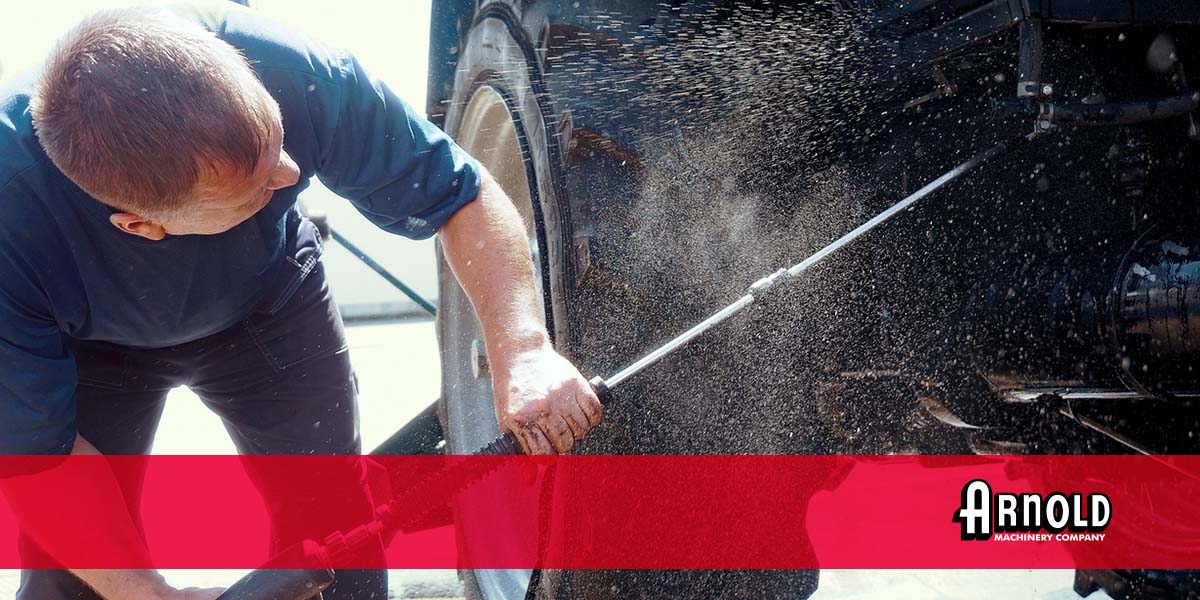
How to Clean Heavy Equipment
Heavy equipment can power through mud, rain and rocky terrain, but letting the resulting grime sit on your machines can be a costly mistake. A thorough cleaning routine is one of the simplest and most effective forms of preventive maintenance. It stops corrosion before it starts, keeps moving parts operating smoothly and extends your investment’s life. Use these tips to clean heavy equipment properly and keep your machines performing at their best.
Why Clean Heavy Equipment?
Effective construction equipment cleaning has many benefits.
- Prevents mechanical damage: Clearing debris from the undercarriage protects hydraulic hoses from abrasion and prevents articulation joints from freezing and locking up.
- Improves operator safety: Maintain visibility by keeping windows and mirrors clean.
- Maintains resale value: Regular cleaning protects your paintwork and frame from rust, which can preserve your machine’s value.
- Easier equipment maintenance and inspections: Mechanics are more likely to spot hairline cracks or leaks on a clean piece of heavy equipment.
- Professional appearance on jobsites: A well-maintained fleet gives a positive first impression of a professional, trustworthy business.
Safety and Preparation
Heavy-duty machinery requires a rigorous cleaning process, including these precautions.
- Wear safety gear: Personal protective equipment is mandatory, especially around chemical degreasers. When you use a pressure washer, mud, debris and grease can also fly off at high speeds. Consider wearing insulated coveralls, anti-slip boots for wet floors, eye protection and heavy-duty gloves.
- Use extension wands: High-pressure water without a proper extension wand can cause severe skin injection hazards.
- Cover sensitive components: Protect the engine intake, exhaust and electrical components before washing. Never blast hydraulic hoses at close range, as it can force water past the seals.
- Use hot water carefully: Take extra care if using hot-water washers to avoid scalding.
- Remember pressure washer basics: Never point the wand at yourself or others.
- Handle chemicals with care: Degreasers containing sodium hydroxide are severe irritants that cause rapid tissue damage.
What You’ll Need
Clean your heavy machinery by gathering the following tools and supplies:
- Industrial pressure washer
- Water cannon
- Degreasers
- Brushes and application tools
- Interior cleaner
- Microfiber cloths
- Protective wax or sealant
While a pressure washer is ideal for cutting through grease and compacted dirt, consider using a high-volume water cannon in the prewash phase. The water cannon uses a much larger volume of water to clear the initial debris, rocks and soft mud, allowing you to detail more precisely with the pressure washer afterward. This combination approach could save you hours compared to using a pressure washer alone.
Exterior Cleaning Method
Here’s how to clean the exterior of your heavy machinery:
- Before washing, walk around your equipment to check for obvious leaks or broken parts.
- Manually loosen heavy, caked-on mud with a shovel or brush. Then, use a water cannon to flush the heaviest debris from the undercarriage.
- Next, use your pressure washer to clean off the remaining mud. Hot water works best to cut through grease. Keep a distance of at least one foot for safety reasons. Use wide-angle tips to protect painted surfaces.
- Pay particular attention to the undercarriage. Cleaning there is crucial to prevent track or roller damage.
- After your first pass with the pressure washer, apply a degreaser from the bottom up to prevent streaking. Let the product sit according to the manufacturer’s instructions.
- Rinse the degreaser off with cold water.
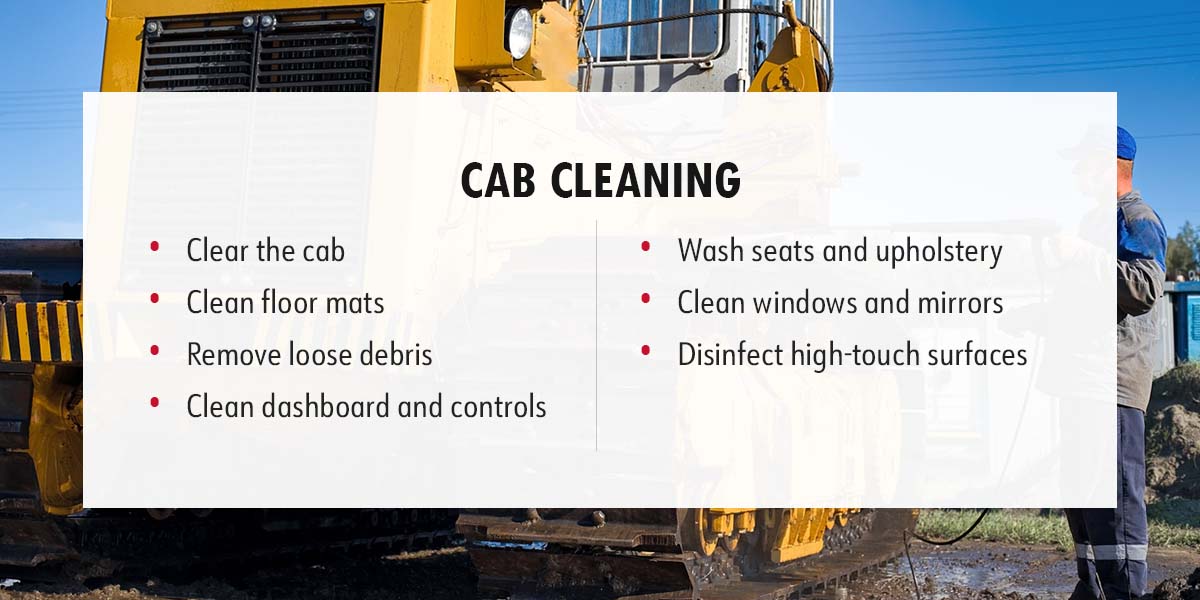
Cab Cleaning
Keep a clean, tidy cab in just a few steps.
- Clear the cab: Remove trash or personal items to make cleaning easier.
- Clean floor mats: Take your floor mats out of the cab. Wash them and let them dry while you clean the rest of the cab.
- Remove loose debris: Blow out or vacuum the cab.
- Clean dashboard and controls: Use a damp microfiber cloth to clean dirt and dust from the dashboard. Avoid using harsh chemicals on touch screens, which may cause damage.
- Wash seats and upholstery: Find a cab cleaning product that is safe to use on various surfaces like upholstery, plastics and metal.
- Clean windows and mirrors: Take care to minimize streaks.
- Disinfect high-touch surfaces: Focus on joysticks, steering wheels and door handles.
Equipment-Specific Cleaning Tips
While you can take a similar approach to most heavy machinery, there are still some specifics to consider.
- Excavators and compact track loaders: Tracked machines like excavators need daily undercarriage cleaning. Wash out the knuckle joints and pins on the boom and stick to prevent abrasive dirt from grinding away grease and bushings. These steps prepare your excavator for maintenance checks.
- Dozers: Dozers push massive amounts of material, which can often spill over the blade and clog the front grill. Check that the radiator and cooling fins are clear. Also, flush out the areas behind the hydraulic cylinder guards where rocks or debris can get trapped.
- Wheel loaders: Thoroughly wash out the center articulation joint to ensure the machine can steer freely without debris binding the cylinders.
- Skid steers: Skid steers can be susceptible to getting dirt, leaves and debris stuck in the engine bay and belly pan. Tilt the cab up, following safety lockout procedures, to give you better access. Then, wash out the belly pan where oil and debris accumulate. Blast your quick-attach plate to prevent attachments from jamming.
Finishing and Protection
After washing, consider these finishing touches.
- For a standard end-of-day clean, let the machine air dry.
- For deeper cleaning, you may want to apply wax to protect your paintwork and prevent dirt from sticking to your machine.
- You can also use UV protection products for your rubber hoses and cab interiors.
- Consider applying an undercoat with a rust inhibitor if you use your machines in corrosive environments.
- Compressed air can help you dry your machine quickly. You can also use compressed air to blow out water from electrical joints and hard-to-access areas, such as hinges.
Common Mistakes to Avoid
Avoid these mistakes when cleaning heavy equipment:
- Using excessive water pressure can strip paint and ruin decals.
- Spraying directly into electrical components can cause immediate machine failure.
- Neglecting the undercarriage can cause premature wear.
- Using harsh chemicals on painted surfaces may cause oxidation.
- Skipping the drying process may increase the risk of rust in hidden joints.
DIY vs. Professional Heavy Equipment Cleaning
Thoroughly cleaning heavy machinery takes hours. You should weigh the cost of in-house labor and supplies against hiring a mobile wash crew to clean your machines. If your machine is due for a major service or maintenance job, a professional clean ensures the mechanic can perform the work easily.
Frequently Asked Questions
Here are some sought-after tips for cleaning heavy equipment.
What Is the Best Way to Clean Heavy Equipment?
The best way to clean your machine is to use a combination of tools, starting by removing any large chunks of material with a shovel. Next, use a water cannon to knock off mud and debris. Clean and detail each side of your heavy equipment with an industrial pressure washer and degreaser, focusing on the undercarriage.
How Often Should I Clean Heavy Equipment?
Set a cleaning schedule with clear expectations for each task. Remove large debris from tracks daily and wash your machine weekly to prevent dirt buildup. Schedule deep cleans monthly or bimonthly for more thorough maintenance. Detail, wax or undercoat your heavy equipment before storage or after a busy season.
What Degreaser Is Best for Heavy Equipment?
Sodium hydroxide is highly effective for heavy grease, but requires strict safety protocols. Eco-friendly degreasers are safer for daily use and better for the environment while still offering strong cleaning power.
Keep Your Machines Running With Arnold Machinery Company
Cleaning heavy equipment is the cornerstone of a successful preventive maintenance program. Sometimes, you may spot issues with your machines when tending to them. Whether it’s a frayed hydraulic hose, cracked bucket tooth or an engine issue, Arnold Machinery Company has the inventory and technicians to get your equipment up and running.
You can depend on our Silver Service® guarantee for 100% customer satisfaction. Contact us today to schedule an appointment.
Subscribe for Updates